
Texas THC Laws Change on July 31, 2026: What Every Texan Needs to Know About Delta-8, THCA, and Hemp Products
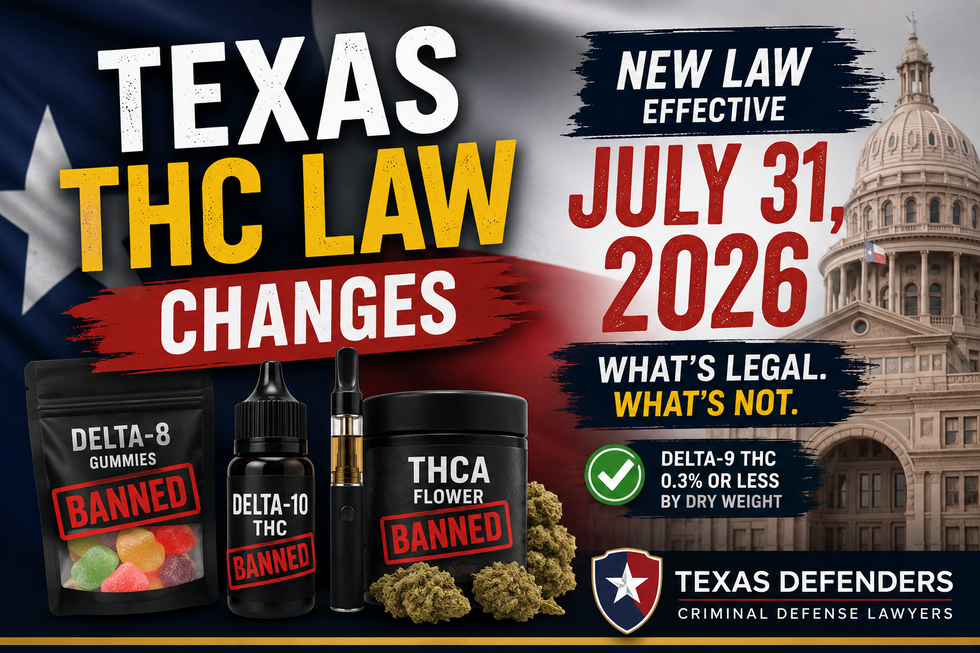
Texas THC Laws Have Changed: Here's What the July 31, 2026 Rules Mean for You
Beginning July 31, 2026, Texas dramatically changed its hemp and THC landscape.
Products that were legally sold in smoke shops, CBD stores, convenience stores, and specialty retailers just days ago have suddenly become illegal under new regulations adopted by the Texas Department of State Health Services (DSHS).
The change affects thousands of Texas businesses and millions of consumers who have purchased hemp-derived THC products over the past several years.
If you've been buying Delta-8 gummies, THCA flower, Delta-10 vape cartridges, or THCP edibles, it's important to understand that many of these products are no longer legal—even if they were purchased legally before Friday.
At Texas Defenders, we've already begun receiving questions from concerned Texans wondering:
-
Can I still possess Delta-8?
-
Is THCA flower illegal now?
-
Are THC gummies still legal?
-
What happens if police find these products during a traffic stop?
-
Can I be arrested?
Here's everything you need to know.
Why Did Texas Change the Law?
The story begins back in 2019.
That year, Texas legalized industrial hemp following passage of the federal Farm Bill. Governor Greg Abbott signed legislation allowing hemp products containing no more than 0.3% Delta-9 THC by dry weight.
The law was primarily intended to legalize:
-
CBD
-
Hemp cultivation
-
Certain hemp-derived products
However, manufacturers quickly realized they could chemically convert CBD into other intoxicating cannabinoids such as:
-
Delta-8 THC
-
Delta-10 THC
-
THCP
-
Delta-6 THC
These products exploded in popularity because businesses argued they technically complied with the 2019 hemp law.
For years, smoke shops across Texas openly sold products capable of producing intoxicating effects similar to marijuana.
The Legal Battle That Lasted Years
In 2021, the Texas Department of State Health Services attempted to classify manufactured Delta-8 and similar cannabinoids as Schedule I Controlled Substances.
The hemp industry sued.
Courts blocked enforcement while the lawsuit moved through the judicial system.
That temporary injunction allowed thousands of Texas retailers to continue selling these products.
Everything changed on May 1, 2026.
The Texas Supreme Court ruled that DSHS had the legal authority to classify manufactured cannabinoids such as Delta-8 as controlled substances.
After the agency republished the official regulations in the Texas Register on July 10, the effective date became July 31, 2026.
What THC Products Are Now Illegal in Texas?
As of July 31, 2026, Texas has effectively prohibited many of the hemp products that became commonplace over the last several years.
Products now prohibited include:
-
Delta-8 THC
-
Delta-10 THC
-
Delta-6 THC
-
THCP
-
THCA hemp flower
-
Products containing more than trace amounts of these cannabinoids
This means many products that were displayed openly on store shelves just days ago can no longer legally be sold.
Retailers have been warned to immediately remove prohibited inventory.
What THC Products Are Still Legal?
Not every hemp product disappeared overnight.
Certain products remain legal under Texas law.
These include:
CBD Products
CBD remains legal provided it complies with applicable hemp regulations.
Delta-9 THC Edibles
Texas still permits certain consumable hemp products containing:
-
0.3% or less Delta-9 THC by dry weight
Examples may include:
-
Gummies
-
Beverages
-
Certain edibles
The key measurement remains 0.3% Delta-9 THC by dry weight, not the total milligrams contained in the package.
That distinction often confuses consumers.
A large gummy may legally contain dozens of milligrams of Delta-9 THC if it still falls below the allowable concentration threshold.
Why This Law Confuses So Many Texans
One of the biggest problems with Texas cannabis laws is that they are anything but simple.
A consumer walking into two different stores may see products labeled:
-
Hemp
-
CBD
-
Delta-9
-
THC
-
THCA
-
Delta-8
-
Live Resin
-
Full Spectrum
To the average person, they all appear similar.
Legally, however, they can be treated very differently.
Someone may unknowingly purchase a prohibited cannabinoid believing it is simply another legal hemp product.
That's why understanding exactly what you're purchasing has never been more important.
Can You Be Arrested for Possessing Delta-8?
Potentially, yes.
Because Texas now classifies many manufactured cannabinoids as controlled substances, possession may expose individuals to criminal investigation.
Whether someone is ultimately charged depends on many factors, including:
-
Laboratory testing
-
Product composition
-
Quantity
-
Packaging
-
Law enforcement investigation
-
Prosecutorial discretion
Every case is different.
What About THCA Flower?
One of the biggest surprises in the new regulations involves THCA flower.
For years, many retailers marketed THCA flower as federally compliant hemp because THCA itself is not intoxicating until heated.
Once smoked, however, THCA converts into Delta-9 THC.
Texas regulators have now made clear they consider THCA hemp flower among the prohibited products.
This represents one of the largest changes in the state's hemp marketplace.
What Happens During a Traffic Stop?
Imagine you're driving through Dallas, Fort Worth, Plano, Frisco, McKinney, Denton, Arlington, or anywhere else in Texas.
An officer stops your vehicle.
During the stop, police discover:
-
THC vape cartridges
-
Hemp flower
-
Gummies
-
Disposable vape pens
Even if you purchased them legally weeks earlier, officers may investigate whether those products violate current Texas law.
Depending on the circumstances, products may be seized and submitted for laboratory analysis.
If testing indicates prohibited cannabinoids are present, criminal charges could follow.
Retailers Face Serious Consequences Too
The new regulations don't just affect consumers.
Texas has more than 14,000 licensed hemp retailers.
Businesses that continue selling prohibited products risk:
-
Criminal investigations
-
Regulatory action
-
Inventory losses
-
Business interruption
-
License issues
-
Significant financial consequences
Many stores spent this week removing inventory before the deadline.
The Political Debate Isn't Over
Although the July 31 regulations are now in effect, the broader debate surrounding THC products is far from settled.
Some Texas lawmakers continue pushing for a complete prohibition on consumable THC products—including hemp-derived Delta-9 products that currently remain legal.
Governor Greg Abbott previously vetoed legislation that would have broadly banned consumable THC products, citing concerns about unintended consequences and regulatory approaches.
Instead, the governor has supported stricter regulation, including limiting purchases to adults 21 and older.
Meanwhile, Lt. Governor Dan Patrick has continued advocating for broader restrictions and has directed further study of the industry's public health impacts ahead of future legislative sessions.
That means additional changes could still be coming in 2027.
What Should You Do If You Still Have Delta-8 or THCA Products?
Because these regulations are new, many Texans are unsure what to do.
Some practical considerations include:
-
Stop purchasing products that are now prohibited.
-
Read product labels carefully before buying any hemp-derived item.
-
Keep receipts and original packaging for products purchased before the rule change, although this does not necessarily provide a legal defense.
-
Do not assume that because a product was legal yesterday it remains legal today.
-
If questioned by law enforcement, remember that you have the right to remain silent and the right to speak with an attorney before answering questions.
The specific legal implications of possessing products purchased before July 31 can depend on the facts of the case and the applicable criminal statutes, so anyone facing an investigation should seek legal advice promptly.
Arrested for a THC or Drug Charge in Texas? Texas Defenders Can Help.
Texas drug laws continue to evolve, and many people may find themselves facing criminal allegations over products they believed were legal.
If you've been arrested or are under investigation for:
-
Possession of a Controlled Substance
-
Marijuana charges
-
THC vape cases
-
Delta-8 investigations
-
THCA flower possession
-
Drug paraphernalia charges
-
Drug-related probation violations
the decisions you make immediately after your arrest can significantly impact your case.
At Texas Defenders, our criminal defense attorneys represent clients throughout Dallas, Fort Worth, Plano, Frisco, McKinney, Denton, Arlington, Irving, Garland, Mesquite, Richardson, and communities across North Texas. We stay current on rapidly changing drug laws and aggressively challenge unlawful searches, questionable laboratory testing, and the prosecution's evidence.
If you're facing a drug-related charge, don't assume there are no defenses simply because the law changed. Every case deserves an individualized review, and early intervention by an experienced criminal defense lawyer can make a meaningful difference.
Call Texas Defenders today at 214-306-9696 for a free, confidential case evaluation. One bad choice—or one misunderstood product—shouldn't ruin your life.







Comments
There are no comments for this post. Be the first and Add your Comment below.
Leave a Comment