
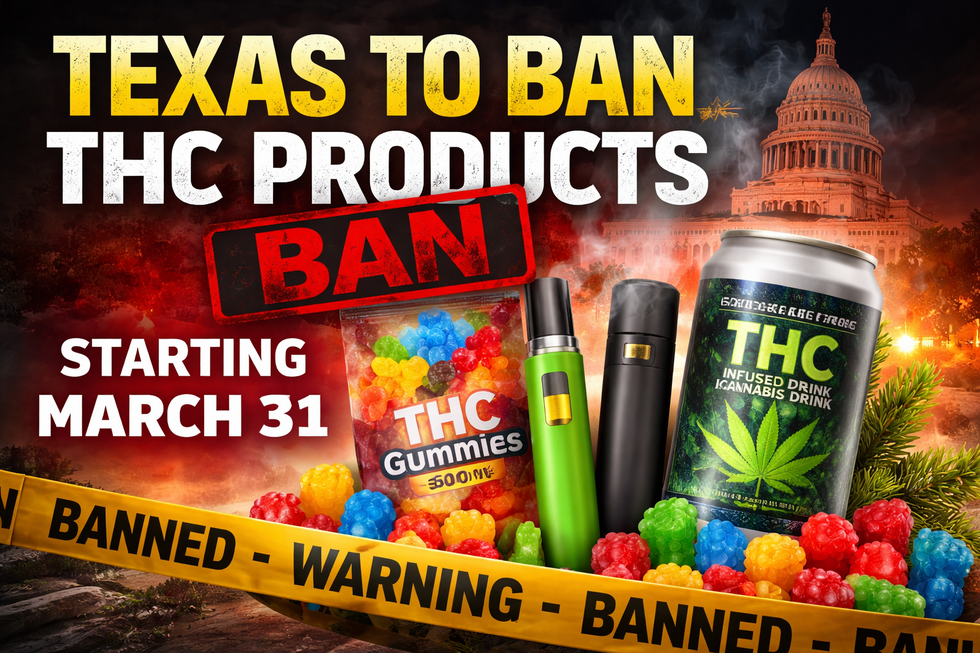
Texas is on the verge of a major shift in cannabis policy. If the current legislation moves forward as expected, most THC products currently sold across the state — including THC vape pens, gummies, and THC-infused drinks — could become illegal beginning March 31.
For the past several years, many Texans believed these products were legal because they were sold openly in smoke shops, CBD stores, bars, and even convenience stores. But the legal framework that allowed these products to exist was always fragile, and lawmakers are now moving to shut the door.
If the ban takes effect, products that people have been purchasing legally for years could suddenly expose them to criminal charges under Texas drug laws.
For residents of Dallas, Fort Worth, Plano, Frisco, McKinney, Denton, and surrounding North Texas cities, this change could dramatically increase marijuana and controlled substance arrests.
Below is a breakdown of what is happening, why THC products were legal before, and what Texans need to know before March 31.
Why THC Products Were Legal in Texas in the First Place
To understand the upcoming ban, you have to understand how THC products became legal in Texas in the first place.
In 2019, Texas passed House Bill 1325, which legalized hemp.
Under the law:
• Hemp was defined as cannabis containing less than 0.3% Delta-9 THC by dry weight
• Marijuana remained illegal
• Hemp-derived products became legal to manufacture and sell
At the time, lawmakers were primarily thinking about industrial hemp, not recreational THC products.
But manufacturers quickly discovered a loophole.
Using hemp-derived cannabinoids, companies began producing products containing:
-
Delta-8 THC
-
Delta-9 THC derived from hemp
-
Delta-10 THC
-
THC-O and other synthetic cannabinoids
These compounds were chemically similar to marijuana THC and could produce the same intoxicating effects.
Because they were derived from hemp and contained less than 0.3% Delta-9 THC, businesses argued they were legal under Texas law.
This led to an explosion of THC products across the state.
The THC Market Exploded Across Texas
Over the last several years, THC products have become extremely common across Texas.
You can currently find THC products at:
• Smoke shops
• CBD stores
• Vape shops
• Bars
• Liquor stores
• Gas stations
• Online retailers
Popular products include:
THC Vape Pens
Disposable THC vape pens and cartridges have become one of the most common products.
They typically contain Delta-8 or hemp-derived Delta-9 and are marketed as legal alternatives to marijuana.
However, many law enforcement agencies still treat vape cartridges as illegal THC concentrates, which carry serious felony charges in Texas.
THC Gummies
Edible THC gummies are widely sold across the state.
Because the 0.3% THC rule is based on weight, manufacturers can produce gummies with large total amounts of THC while still technically complying with the hemp law.
For example:
A 5-gram gummy could legally contain 15 mg of Delta-9 THC under the 0.3% rule.
That is the same dose commonly found in marijuana edibles sold in legalized states.
THC Drinks
THC-infused drinks have recently exploded in popularity.
These beverages are now sold in:
• bars
• restaurants
• liquor stores
• music venues
• festivals
Many are marketed as “legal cannabis cocktails.”
But if the upcoming Texas ban takes effect, these products may disappear almost overnight.
Why Texas Lawmakers Are Moving to Ban THC
State lawmakers have become increasingly concerned about the growth of the hemp THC market.
Several issues have been raised during legislative hearings:
1. Intoxication
Many of the products currently sold can produce the same intoxicating effects as marijuana.
Lawmakers argue this effectively legalized marijuana without voter approval.
2. Lack of Regulation
Unlike alcohol or prescription drugs, THC products in Texas are largely unregulated.
Investigations have found products with:
• incorrect labeling
• significantly higher THC levels than advertised
• contamination with solvents or heavy metals
3. Youth Access
Another concern is that many THC products are packaged like candy or soda and sold in locations where minors may have access.
Some lawmakers argue the current system makes it too easy for teenagers to obtain intoxicating substances.
What the New Texas THC Ban Would Do
If the legislation takes effect, most intoxicating THC products derived from hemp will likely become illegal.
This could include:
• Delta-8 THC
• hemp-derived Delta-9 THC products
• Delta-10 THC
• THC-O and similar cannabinoids
• many THC vapes, edibles, and drinks
While the final details may still change, the goal of the legislation is to eliminate the intoxicating hemp market entirely.
CBD products that do not produce intoxication may remain legal.
But the THC products currently sold across Texas could disappear quickly.
What Happens to Stores Selling THC Products?
Texas currently has thousands of businesses selling hemp-derived THC products.
If the ban takes effect, those businesses will likely be required to:
• stop selling THC products
• remove them from shelves
• potentially dispose of remaining inventory
Businesses that continue selling banned THC products could face criminal penalties and regulatory action.
What This Means for People Who Already Have THC Products
One of the biggest questions people are asking is:
What happens if you already bought THC products?
Once the law changes, possessing certain THC products could expose someone to drug possession charges.
Texas drug laws are strict.
If a THC product is classified as a controlled substance or illegal cannabis extract, the penalties can be severe.
For example, possession of THC concentrate (such as vape cartridges or THC oil) can be charged as a state jail felony in Texas.
This means that something purchased legally one month could potentially lead to criminal charges the next.
Why THC Vape Pens Are Particularly Dangerous Under Texas Law
Many people assume vape pens are treated the same as marijuana.
They are not.
Under Texas law, THC vape cartridges are often classified as concentrates, which fall under Penalty Group 2 of the Texas Controlled Substances Act.
Even small amounts can lead to felony charges, including:
• State jail felony
• Third-degree felony
• Second-degree felony (depending on amount)
This is one reason THC vape arrests have become extremely common in North Texas.
Enforcement Could Increase After the Ban
When laws change, enforcement usually follows.
Police officers across Dallas County, Tarrant County, Collin County, and Denton County are already familiar with THC products because they regularly encounter them during:
• traffic stops
• bar patrols
• public intoxication investigations
• searches related to other crimes
If THC products become illegal again, those same products could suddenly become probable cause for arrest.
The Gray Area That May Continue
Even with a ban, one issue will likely remain:
testing.
For years, Texas prosecutors struggled to prosecute marijuana cases because labs had difficulty distinguishing legal hemp from illegal marijuana.
Similar issues may arise with THC products.
Distinguishing between different cannabinoids can require advanced lab testing, which may affect how some cases are prosecuted.
What Texans Should Do Before March 31
If the THC ban takes effect, Texans should be aware that products currently sold in stores may no longer be legal.
This includes products purchased from:
• CBD stores
• vape shops
• smoke shops
• bars
• online retailers
Just because something was sold openly does not necessarily mean it will remain legal after the law changes.
Anyone unsure about the legality of a product should stay informed as the legislation develops.
THC Laws in Texas Are Changing Fast
Texas cannabis law is evolving rapidly.
Over the last decade we have seen:
• hemp legalization
• THC loopholes
• new cannabinoids entering the market
• increasing enforcement efforts
Now lawmakers appear ready to reverse course and remove most intoxicating THC products from the legal market.
For Texans who have become accustomed to purchasing THC drinks, gummies, or vape pens, the legal landscape may look very different after March 31.
FAQ: Texas THC Ban
Is THC currently legal in Texas?
Only certain hemp-derived products containing less than 0.3% Delta-9 THC by dry weight are currently legal.
What THC products might become illegal?
Proposed legislation could ban many products including:
• Delta-8 THC
• THC gummies
• THC vape pens
• THC drinks
• other intoxicating hemp products.
When would the ban start?
If passed as expected, the law could take effect March 31.
Will CBD still be legal?
Non-intoxicating CBD products will likely remain legal under Texas hemp laws.
Can you be arrested for THC vape pens in Texas?
Yes. THC vape cartridges are often treated as felony drug possession under Texas law.
Are THC gummies illegal?
Currently many hemp-derived gummies are sold legally, but the new legislation could ban them.
Are THC drinks legal in Texas bars?
Some bars currently sell hemp-derived THC drinks, but this could change if the new law takes effect.
Why is Texas banning THC products?
Lawmakers say intoxicating hemp products have created an unregulated marijuana market.
Will stores have to stop selling THC?
Yes. Businesses may be required to remove THC products from shelves.
What happens if you already bought THC gummies or vape pens?
If the law changes, possessing certain THC products could lead to criminal charges.
Why are vape pens treated differently than marijuana?
THC oil is classified as a concentrate, which carries more severe penalties.
Can police arrest someone for THC from hemp?
Yes. Officers often rely on field tests or lab results to determine THC content.
Could the law still change?
Yes. Legislative details may evolve before final passage.
Are marijuana laws changing in Texas?
Texas has not legalized recreational marijuana, and enforcement remains strict.
Should someone contact a lawyer if arrested for THC possession?
Yes. Drug charges involving THC products can carry serious penalties and should be addressed quickly.







Comments
There are no comments for this post. Be the first and Add your Comment below.
Leave a Comment