
Texas Hemp Laws Explained (2026): What's Legal, What's Not, and What Can Get You Arrested
Introduction
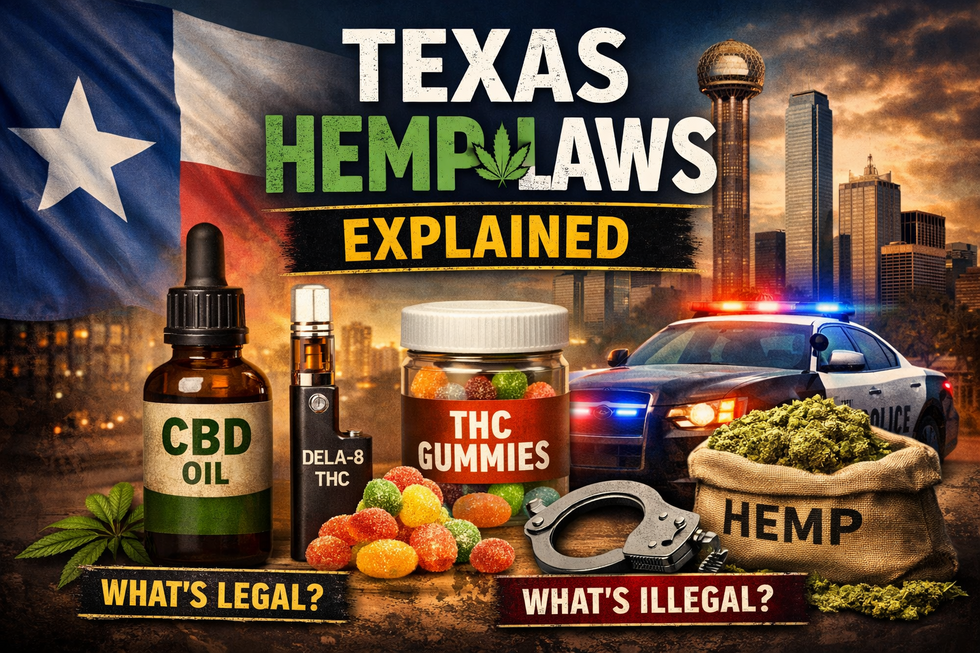
Hemp products are everywhere in Texas—gas stations, smoke shops, bars, and even wellness stores. You'll see THC gummies, Delta-8 vapes, CBD oils, and drinks marketed as “legal.”
But here's the reality:
Texas hemp law is one of the most misunderstood—and most dangerous—areas of criminal law right now.
People assume that if a product is sold openly, it must be legal. That assumption has led to arrests, felony charges, and life-altering consequences across Dallas, Fort Worth, Collin County, and beyond.
At Texas Defenders, we are already seeing cases where people are charged for products they bought legally.
This guide breaks down:
-
What Texas law actually says about hemp
-
The difference between hemp and marijuana
-
Why THC products are still getting people arrested
-
What law enforcement looks for
-
Where the legal gray areas are
The Foundation: Hemp Became Legal in Texas (But With Limits)
In 2019, Texas passed a law allowing hemp under strict conditions.
What is legally considered hemp?
Under Texas law:
-
Hemp = Cannabis with ≤ 0.3% Delta-9 THC
-
Marijuana = Cannabis with > 0.3% Delta-9 THC
That 0.3% threshold is everything.
If a product crosses that line—even slightly—it becomes illegal marijuana under Texas law.
The Big Problem: THC Isn't Just One Thing
Most people think THC = illegal.
But legally, it's more complicated.
Types of THC you'll see in Texas:
-
Delta-9 THC (the main psychoactive compound)
-
Delta-8 THC (derived from hemp)
-
Delta-10 THC
-
THC-O and other synthetic variants
Here's where things get risky:
Texas law focuses on Delta-9 THC concentration—but prosecutors often don't care what label is on the package.
Are THC Gummies, Drinks, and Vapes Legal in Texas?
The short answer:
Sometimes—but they can still get you arrested.
Legal in theory:
A product may be legal if:
-
It is derived from hemp
-
It contains ≤ 0.3% Delta-9 THC
-
It is properly manufactured and labeled
Illegal in practice (common scenarios we see):
-
No lab testing proof
-
THC concentration exceeds limits
-
Product mislabeled
-
Law enforcement assumes it is marijuana
-
Field tests cannot distinguish hemp vs marijuana
Result: You can still be arrested—even if the product was purchased legally.
Why People Are Still Getting Arrested
This is one of the biggest disconnects between the law and reality.
1. Police Can't Tell the Difference
There is no reliable roadside test to distinguish hemp from marijuana.
So officers often:
-
Assume it's marijuana
-
Arrest first, sort it out later
2. Lab Testing Is Required (But Slow)
To prove legality:
-
The substance must be lab tested
-
This takes time
-
Many cases move forward before results
3. Packaging Doesn't Protect You
Even if your product says:
-
“Legal hemp”
-
“Delta-8”
-
“Farm Bill compliant”
That does not stop an arrest.
Smokeable Hemp: Still a Legal Target
Texas technically allows hemp—but:
-
Smokeable hemp products are heavily restricted
-
Retail sale of smokable hemp has been challenged and regulated
-
Law enforcement often treats smokable hemp as marijuana
If it looks like marijuana and smells like marijuana:
You are at risk of arrest.
CBD Products: Safer, But Not Risk-Free
CBD is widely sold and generally legal if:
-
It contains less than 0.3% Delta-9 THC
-
It is properly labeled
-
It is tested and compliant
However, issues arise when:
-
CBD products contain more THC than advertised
-
Labels are inaccurate
-
Products are unregulated
What About Medical Marijuana in Texas?
Texas has a very limited medical marijuana program.
Key points:
-
Only low-THC cannabis is allowed
-
Must be prescribed through the Compassionate Use Program
-
Strict qualifying conditions apply
This is not the same as recreational marijuana legalization.
The Legal Gray Area: Delta-8 and Hemp-Derived THC
Delta-8 is one of the most controversial areas.
Why?
-
It is derived from hemp
-
It is psychoactive
-
It exists in a legal gray zone
Texas has attempted to ban it, but litigation has kept it available in many places.
Bottom line:
Just because it's sold does NOT mean it's safe from prosecution.
Possession Charges You Could Face
If law enforcement believes your product is illegal marijuana, you could be charged with:
Misdemeanor Possession
-
Under 2 oz = Class B misdemeanor
-
Up to 180 days in jail
Higher-Level Charges
-
Larger amounts = felonies
-
THC concentrates = often charged more severely
This includes:
-
Vape cartridges
-
Wax
-
Oils
Even small amounts can become serious felony cases.
Edibles and Concentrates: Higher Risk
Many people don't realize:
THC concentrates are treated more harshly than flower.
That means:
-
Gummies
-
Vape pens
-
THC drinks
Can lead to felony charges, even in small quantities.
Why This Matters in Dallas and Surrounding Counties
In places like:
-
Dallas County
-
Tarrant County
-
Collin County
-
Denton County
We are seeing:
-
Increased enforcement
-
Confusion among officers
-
Aggressive prosecution in certain cases
This is not theoretical—this is happening right now.
What To Do If You're Arrested for a Hemp Product
If you are arrested:
Do NOT:
-
Try to explain the science on the roadside
-
Argue about legality
-
Assume it will be dismissed automatically
Do:
-
Remain silent
-
Ask for an attorney
-
Preserve receipts and packaging
-
Contact a defense lawyer immediately
The Bottom Line: Legal Doesn't Mean Safe
The biggest misconception in Texas right now is this:
“If it's sold in a store, it must be legal.”
That is not how the criminal justice system works.
You can buy something legally and still be arrested for it.
Why Legal Representation Matters
Hemp-related cases require:
-
Understanding of lab testing
-
Knowledge of statutory thresholds
-
Experience challenging improper charges
At Texas Defenders, we have handled cases involving:
-
THC vapes
-
Delta-8 products
-
Misidentified substances
-
Improper arrests
These cases are defensible—but only if handled correctly.
Call Texas Defenders Today
If you or someone you know is facing charges related to THC, hemp, or marijuana:
Texas Defenders
3302 Swiss Circle, Dallas, TX 75204
214-306-9696
We serve:
-
Dallas
-
Fort Worth
-
Plano
-
Frisco
-
McKinney
-
Denton
-
And all surrounding areas
Blog Index Summary
Texas hemp laws allow products with less than 0.3% Delta-9 THC, but legal confusion continues to lead to arrests across Texas. This guide explains what hemp products are legal, the risks of THC gummies and vapes, and how people can still face criminal charges despite buying products legally.
FAQ: Texas Hemp Laws
1. Is hemp legal in Texas?
Yes, if it contains ≤ 0.3% Delta-9 THC.
2. Are Delta-8 products legal in Texas?
They exist in a legal gray area and can still lead to arrest.
3. Can you get arrested for THC gummies in Texas?
Yes—even if purchased legally.
4. What is the legal THC limit in Texas?
0.3% Delta-9 THC by dry weight.
5. Is CBD legal in Texas?
Yes, if it complies with THC limits and labeling laws.
6. Are vape cartridges legal?
Only if compliant—but often charged as illegal concentrates.
7. What happens if THC exceeds 0.3%?
It is considered illegal marijuana.
8. Can police tell the difference between hemp and marijuana?
No, not without lab testing.
9. Is smokable hemp legal?
It exists in a complicated and heavily regulated area.
10. Can packaging protect you from arrest?
No.
11. Are edibles treated differently under Texas law?
Yes—often more severely.
12. Is medical marijuana legal in Texas?
Only under a limited program.
13. What should I do if arrested?
Remain silent and call a lawyer immediately.
14. Can charges be dismissed?
Yes, but it depends on the evidence and legal strategy.
15. Why are hemp laws so confusing?
Because of overlapping federal and state regulations.







Comments
There are no comments for this post. Be the first and Add your Comment below.
Leave a Comment