
Can You Carry a Gun in a Texas Bar?
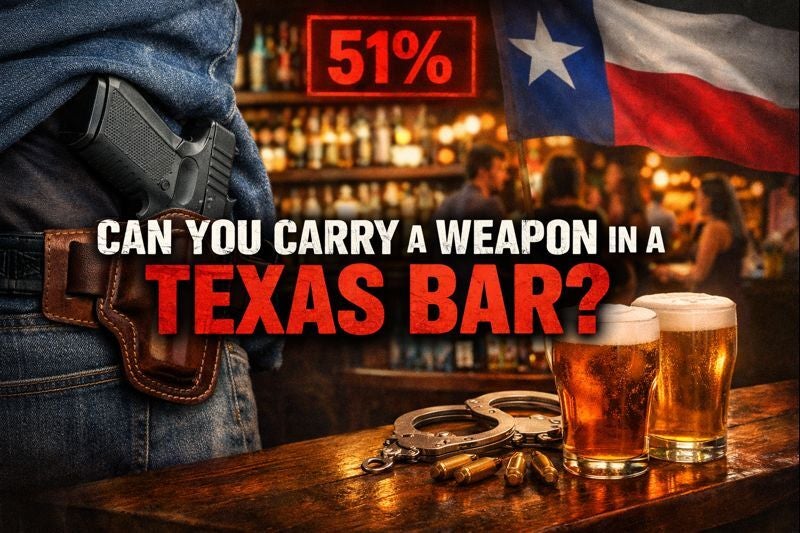
Texas has some of the most firearm-friendly laws in the country, but bars are one of the most misunderstood and dangerous places to carry a weapon from a legal standpoint. Many people assume that because Texas allows open and concealed carry, they can legally bring a firearm into a bar. That assumption can lead to serious felony charges.
If you've been arrested for carrying a weapon in or near a bar in Dallas, Fort Worth, or anywhere in North Texas, understanding how Texas law treats alcohol-serving establishments is critical.
The 51% Rule: The Key to Texas Bar Weapon Laws
Under Texas law, the most important issue is whether the establishment qualifies as a “51% location.”
A 51% location is a business that earns 51% or more of its revenue from the sale of alcohol for on-premises consumption. These establishments are legally considered bars, not restaurants.
If a location is a 51% establishment:
-
Carrying a firearm is illegal
-
This applies to licensed and unlicensed carriers
-
The offense is typically a felony
Bars are required to display a large red “51% sign” issued by the Texas Alcoholic Beverage Commission, but failure to notice the sign does not protect you from arrest.
Restaurants vs. Bars: Why the Distinction Matters
Many establishments blur the line between restaurant and bar. A place may serve food, have a full kitchen, and still legally qualify as a bar under Texas law.
Here's the difference:
-
Restaurant (under 51%)
Firearm carry may be legal depending on signage and your license status. -
Bar (51% or more alcohol sales)
Firearm carry is strictly prohibited, regardless of license.
This is where many weapon arrests happen—especially in entertainment districts like Deep Ellum, Uptown Dallas, Fort Worth Stockyards, and West 7th.
What About Concealed Carry or License Holders?
Texas license holders often believe their License to Carry (LTC) allows them to carry anywhere unless explicitly prohibited. That is not true for bars.
If the establishment is a 51% location:
-
Concealed carry is illegal
-
Open carry is illegal
-
License status does not matter
Being licensed does not reduce the charge.
Weapons Other Than Firearms
Texas law doesn't just apply to guns. People are frequently arrested for carrying:
-
Knives over legal length
-
Clubs or batons
-
Brass knuckles
-
Firearms secured in bags or vehicles connected to the bar
Depending on the circumstances, charges may include Unlawful Carrying Weapons (UCW) or Weapons Prohibited under the Texas Penal Code.
Alcohol + Weapons = Enhanced Risk
Even if the establishment is not a 51% location, alcohol complicates everything.
Law enforcement will closely examine:
-
Whether you consumed alcohol
-
Whether you appeared intoxicated
-
Whether the weapon was displayed or discovered during a disturbance
If police believe alcohol impaired your judgment, charges may escalate or additional offenses may be added.
How Bar Weapon Cases Start
Most bar-related weapons cases don't start with proactive policing. They usually begin with:
-
A disturbance or argument
-
A fight or verbal confrontation
-
A bouncer or staff member calling police
-
A pat-down during removal from the premises
Once police are involved, the presence of a weapon can immediately shift the situation from a misdemeanor call to a felony arrest.
Common Charges for Carrying a Weapon in a Bar
Depending on the facts, charges may include:
-
Unlawful Carrying Weapons (UCW)
-
Weapons Prohibited
-
Felony firearm possession in a 51% establishment
-
Additional charges tied to intoxication or conduct
Convictions can carry prison time, loss of gun rights, and long-term consequences.
Defenses in Texas Bar Weapon Cases
Every case is fact-specific. Potential defense issues may include:
-
Whether the location legally qualifies as a 51% establishment
-
Improper or missing signage
-
Lack of actual possession or control
-
Illegal search or seizure
-
Constitutional violations during detention or arrest
These cases are very defensible, but only when handled early and aggressively.
Arrested for a Weapon in a Texas Bar?
If you were arrested for carrying a weapon in a bar in Dallas County, Tarrant County, Collin County, or Denton County, you need a criminal defense team that understands Texas weapons law, bar regulations, and search-and-seizure defenses.
At Texas Defenders, we routinely defend clients facing serious weapon charges arising from bar and nightlife arrests. These cases move fast—and the earlier we get involved, the more options you may have.
📞 Call 214-306-9696
📍 3302 Swiss Circle, Dallas, TX 75204
A single night out should not define the rest of your life.







Comments
There are no comments for this post. Be the first and Add your Comment below.
Leave a Comment