
Understanding Pre-Trial Diversion (PTD) in Texas and How It Can Help Your Case
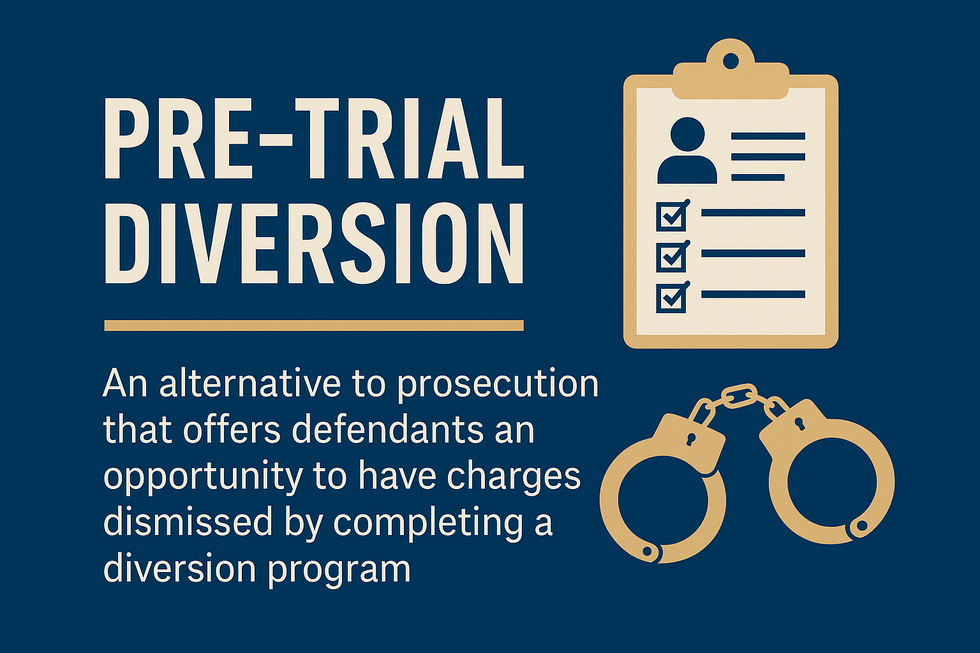
Facing a criminal charge in Texas can feel overwhelming, especially if it's your first time being arrested. The thought of having a conviction on your record can impact your job, education, housing, and even your reputation. Fortunately, many counties in North Texas — including Dallas, Tarrant, Collin, and Denton — offer programs called Pre-Trial Diversion (PTD) that may give certain people a second chance.
What Is Pre-Trial Diversion?
Pre-Trial Diversion (PTD) is an alternative to traditional prosecution. Instead of going through the normal court process, eligible defendants may be offered the opportunity to enter a supervised program.
If the program is successfully completed, the criminal charge can be dismissed. In many cases, the person may later be eligible to have the arrest expunged, which means it can be completely removed from their record.
Think of PTD as a “second chance” program — it's designed to help people who made a mistake but aren't considered a continuing threat to the community.
Who Qualifies for PTD?
Eligibility varies depending on the county and the type of offense, but in general, PTD programs are offered to:
-
First-time offenders with no prior criminal history
-
People charged with non-violent misdemeanors or low-level felonies (such as drug possession, theft, or certain alcohol-related offenses)
-
Defendants who accept responsibility for the offense and are willing to follow program requirements
Each District Attorney's Office has its own rules. For example, Collin County may have slightly different requirements than Dallas or Tarrant County. Having an experienced criminal defense lawyer is key to navigating these rules and convincing prosecutors to grant entry into the program.
What Does the Program Require?
The requirements of PTD depend on the charge, but common conditions include:
-
Attending educational classes (such as theft awareness, anger management, or drug/alcohol education)
-
Community service hours
-
Regular check-ins with a supervision officer
-
Staying out of trouble (no new arrests) during the diversion period
-
Possible restitution to victims
The program typically lasts 6 months to 1 year.
How PTD Helps Defendants
The biggest benefit of PTD is that it can keep your record clean. A criminal conviction can follow you for life, making it harder to:
-
Get a job
-
Rent an apartment
-
Qualify for loans or professional licenses
-
Maintain immigration status (for non-citizens)
By completing PTD, the charge is dismissed. That means you avoid a conviction and may be able to move forward with a clean slate.
Why You Need a Lawyer for PTD
While PTD sounds like a great option, not everyone is automatically offered the program. Prosecutors often require a formal application, supporting documents, and sometimes even letters of recommendation. A defense lawyer can present your case in the best light, highlighting your background, lack of criminal history, and why you deserve a second chance.
At Texas Defenders, our attorneys regularly handle PTD cases in Dallas, Fort Worth, Plano, Frisco, McKinney, Denton, and surrounding areas. We know how each county's program works and can help you apply — or, if necessary, fight for admission if prosecutors are hesitant.
Final Thoughts
Pre-Trial Diversion can be life-changing. Instead of carrying a permanent criminal record, you may be able to walk away with your case dismissed. If you or a loved one has been arrested in Dallas, Tarrant, Collin, or Denton County, don't wait — the earlier you speak to a lawyer, the better your chances of getting into PTD.
📞 If you have questions about whether you qualify for Pre-Trial Diversion, call Texas Defenders today at 214-306-9696 for a free consultation.







Comments
There are no comments for this post. Be the first and Add your Comment below.
Leave a Comment