
Is That Hemp or Marijuana? Why It Could Matter More Than You Think
The 0.3% Line That Can Change Your Life
In Texas, a single decimal point can determine whether you are committing a crime.
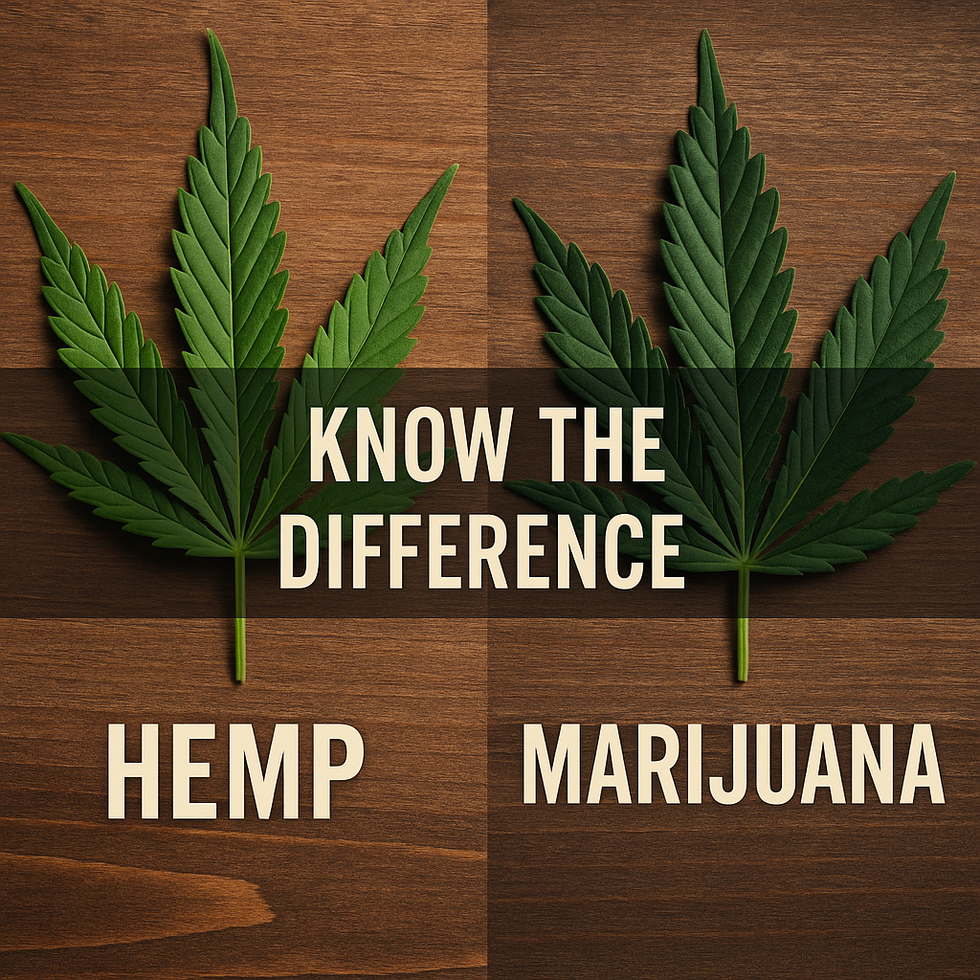
Both hemp and marijuana come from the cannabis plant. They look the same. They smell the same. They are packaged the same. To the average person — and even to many police officers — they are indistinguishable.
But under Texas law, everything turns on one number:
0.3% Delta-9 THC.
-
If the substance contains 0.3% THC or less, it is legally defined as hemp.
-
If it contains more than 0.3% THC, it is legally defined as marijuana.
-
Marijuana remains illegal under Texas controlled substance laws.
That microscopic distinction can mean the difference between:
-
A legal product
-
A Class B misdemeanor
-
A criminal arrest
-
A permanent record
And in many cases, the state cannot even prove the difference without specialized laboratory testing.
If you've been arrested in Dallas, Collin County, Tarrant County, or Denton County for marijuana possession, this distinction could be the most important issue in your case.
How Hemp Became Legal in Texas
In 2018, Congress passed the federal Farm Bill, legalizing industrial hemp nationwide. Texas followed with House Bill 1325 in 2019, which legalized hemp production and possession as long as the THC concentration remained at or below 0.3%.
That change rewrote decades of criminal prosecution practice.
Before 2019:
-
If police believed something was marijuana, that was enough.
-
A visual inspection and basic lab confirmation of cannabis presence sufficed.
-
THC concentration did not matter.
After 2019:
-
The state must prove the THC concentration exceeds 0.3%.
-
Merely identifying cannabis is not enough.
-
The prosecution carries a much heavier burden.
This created immediate chaos in Texas criminal courts.
Many crime labs did not have equipment capable of quantifying THC levels. Prosecutors across Texas temporarily stopped filing low-level marijuana cases because they could not prove the substance was illegal marijuana rather than legal hemp.
But that did not stop arrests.
Why Police Still Arrest People
Even though hemp is legal, marijuana arrests continue every day in North Texas.
Here's why:
1. Appearance and Smell Still Create Probable Cause
Police are trained to recognize marijuana by sight and odor. Hemp looks identical. Officers cannot tell the difference roadside.
So if an officer smells cannabis during a traffic stop, they often treat it as probable cause to search the vehicle.
The legal debate now centers on whether the odor of marijuana alone still establishes probable cause in a post-hemp world. Some courts have upheld it. Others have raised concerns.
But in practice? Arrests still happen.
2. Field Tests Do Not Measure THC Concentration
Most roadside drug tests only detect the presence of cannabis compounds. They do not measure THC percentage.
So a positive field test does not prove the substance is illegal marijuana.
3. Statements Can Be Used Against You
If a person says, “It's weed,” that statement can be used to argue they admitted it was marijuana — not hemp.
That is why remaining silent is critical in any cannabis-related stop.
The Scientific Problem: Proving THC Levels
Here's where hemp vs. marijuana cases become legally fascinating.
To convict someone of marijuana possession, the state must prove beyond a reasonable doubt that:
-
The substance was cannabis.
-
It contained more than 0.3% THC.
-
The defendant knowingly possessed it.
The problem?
Quantitative THC testing is expensive and technically demanding.
Many Texas crime labs:
-
Lack validated methods to measure THC concentration.
-
Have long backlogs.
-
Face chain-of-custody and calibration challenges.
In some counties, prosecutors quietly dismiss small possession cases when lab results are inconclusive.
In others, they proceed aggressively.
This inconsistency is exactly why having an experienced criminal defense lawyer matters.
Marijuana Possession Penalties in Texas
Despite hemp legalization, marijuana possession remains illegal under Texas Health & Safety Code §481.121.
Penalties include:
Under 2 Ounces
Class B Misdemeanor
Up to 180 days in jail
Up to $2,000 fine
2–4 Ounces
Class A Misdemeanor
Up to 1 year in jail
Up to $4,000 fine
4 Ounces – 5 Pounds
State Jail Felony
The consequences extend far beyond fines:
-
Criminal record
-
Employment barriers
-
Professional license consequences
-
Immigration issues
-
Gun rights complications
All over a substance that might legally qualify as hemp.
CBD, Delta-8, Delta-9, and the Gray Market Explosion
Since hemp became legal, Texas has seen an explosion of:
-
CBD flower
-
Delta-8 THC products
-
Hemp-derived Delta-9 edibles
-
Vape cartridges
-
THC beverages
Consumers often assume if it's sold in a store, it must be legal.
That assumption is dangerous.
While hemp-derived products may be lawful if they meet THC limits, law enforcement often treats them as marijuana until proven otherwise.
Packaging, labeling errors, and concentration testing issues can create enormous legal risk.
In some cases, products purchased legally in a store later test above 0.3% THC, placing consumers in legal jeopardy.
How Prosecutors Try to Work Around the Hemp Defense
In recent years, prosecutors in North Texas have adapted.
They may attempt to:
-
Use older lab testing methods and argue THC concentration is inferred.
-
Rely on admissions from defendants.
-
Argue that the product's labeling or marketing indicates marijuana.
-
Use circumstantial evidence like packaging style.
But circumstantial evidence does not replace scientific proof.
The burden remains on the state.
The Odor of Marijuana: Still Probable Cause?
One of the most contested legal issues is whether the smell of marijuana still justifies a search.
Before hemp legalization, courts routinely held that marijuana odor alone established probable cause.
Now the argument is different:
If hemp smells identical and is legal, can odor alone prove criminal activity?
Some courts have sided with law enforcement. Others have acknowledged the legal tension.
In real-world practice across Dallas County and surrounding counties, officers still rely on odor to justify searches.
That makes suppression motions a critical part of defense strategy.
Dallas and North Texas Enforcement Trends
Enforcement varies widely.
In some Dallas-area cases:
-
First-time possession charges may be eligible for diversion.
-
Lab testing delays can lead to dismissals.
-
Weak THC testing can create reasonable doubt.
But do not assume leniency.
Collin County and Denton County prosecutors often take a stricter approach. Tarrant County practices may differ again.
Local knowledge matters.
What Happens If the Lab Cannot Prove THC Level?
If the state cannot prove THC concentration exceeds 0.3%, the case may:
-
Be dismissed.
-
Be reduced.
-
Result in a not guilty verdict.
But dismissal is not automatic.
Defense counsel must:
-
Demand quantitative lab results.
-
Examine calibration and methodology.
-
Challenge admissibility.
-
Cross-examine forensic analysts.
-
File motions to suppress if the search was unlawful.
These cases are technical.
They require understanding both criminal law and forensic science.
Why You Should Never Assume “It Was Just Hemp”
Many people arrested for marijuana say:
“It was hemp.”
“It was CBD.”
“I bought it legally.”
That may be true.
But until lab testing confirms it — and until a defense lawyer scrutinizes that testing — you are still facing criminal prosecution.
Even if the case is dismissed months later, you may have already:
-
Been arrested
-
Posted bond
-
Missed work
-
Experienced reputational harm
The arrest itself can have consequences.
The Bigger Legal Shift in Texas
Texas has not fully legalized marijuana.
But hemp legalization has created an evolving legal landscape.
We are in a transitional era where:
-
Cannabis products are widely available.
-
Laws are technical and nuanced.
-
Enforcement varies by county.
-
Courts are still shaping precedent.
This is not a simple “weed is legal” or “weed is illegal” situation.
It is a highly technical legal battlefield.
Defense Strategies in Hemp vs. Marijuana Cases
At Texas Defenders, hemp-related cases are approached strategically.
Defense may involve:
-
Challenging probable cause for the stop.
-
Suppressing unlawful vehicle searches.
-
Demanding full THC quantification.
-
Cross-examining forensic analysts.
-
Investigating chain of custody.
-
Negotiating diversion or dismissal.
-
Seeking expunction if charges are dropped.
Every case is fact-specific.
And small scientific details can determine the outcome.
The Real Risk: Criminal Records Over Technicalities
The most troubling aspect of hemp vs. marijuana confusion is this:
People are being arrested over substances that are legal if they fall under a chemical threshold invisible to the naked eye.
A decimal point determines whether someone:
-
Keeps their job
-
Loses financial aid
-
Passes a background check
-
Faces immigration consequences
That is why aggressive defense matters.
If You're Arrested for Marijuana in North Texas
If you've been arrested for possession in:
-
Dallas
-
Fort Worth
-
Plano
-
McKinney
-
Frisco
-
Denton
Do not assume the case is open and shut.
The state must prove:
-
The search was lawful.
-
The substance was marijuana.
-
The THC exceeded 0.3%.
-
You knowingly possessed it.
If any element fails, the case weakens significantly.
Final Thoughts: A Decimal Point Should Not Define Your Future
The difference between hemp and marijuana is not visible. It is not detectable by smell. It cannot be determined by appearance.
It is determined by lab science and statutory definitions.
And in Texas, that distinction can mean the difference between freedom and a criminal record.
If you or someone you know has been arrested for marijuana possession in Dallas or surrounding counties, speak with an experienced criminal defense lawyer immediately.
Texas Defenders handles cannabis-related cases across Dallas County, Collin County, Tarrant County, and Denton County.
Call 214-306-9696 for a free consultation and protect your future before that 0.3% becomes a permanent problem.
Frequently Asked Questions: Hemp vs. Marijuana in Texas
1. Is hemp legal in Texas?
Yes. Hemp is legal in Texas if it contains 0.3% THC or less on a dry weight basis. This was legalized in 2019 under Texas House Bill 1325. However, hemp must meet strict THC limits. If it exceeds 0.3% THC, it may be classified as illegal marijuana.
2. Is marijuana legal in Texas?
No. Recreational marijuana remains illegal in Texas. Possession of marijuana can result in misdemeanor or felony charges depending on the amount.
3. What is the legal difference between hemp and marijuana in Texas?
The only legal difference is THC concentration.
-
Hemp = 0.3% THC or less
-
Marijuana = More than 0.3% THC
They look and smell identical. The distinction is chemical, not visual.
4. Can police arrest you for hemp in Texas?
Yes, you can still be arrested if law enforcement believes the substance is marijuana. Officers cannot determine THC percentage by sight or smell. Even if the substance turns out to be legal hemp, you may still face arrest and prosecution before lab testing confirms it.
5. Does the smell of marijuana still give police probable cause to search?
In many Texas jurisdictions, yes. Courts have often upheld that the odor of marijuana can create probable cause for a search. However, this issue is legally contested since hemp smells identical and is legal.
6. How do Texas labs test for THC levels?
Crime labs must conduct quantitative testing to measure THC concentration. Basic field tests only confirm the presence of cannabis compounds — they do not determine whether THC exceeds 0.3%. Without proper quantification, prosecutors may struggle to prove the substance is illegal marijuana.
7. What happens if the state cannot prove THC is above 0.3%?
If prosecutors cannot prove the THC concentration exceeds 0.3%, the marijuana charge may be dismissed or reduced. The burden of proof is on the state.
8. Is Delta-8 THC legal in Texas?
Delta-8 THC legality in Texas has been challenged in court and remains complicated. While many stores sell Delta-8 products, law enforcement scrutiny continues. Legal status can shift based on court rulings and regulatory action.
9. Can you be arrested for CBD flower in Texas?
Yes. Even though CBD is legal if compliant with THC limits, CBD flower looks identical to marijuana. Law enforcement may arrest first and rely on lab testing later.
10. What are the penalties for marijuana possession in Texas?
Penalties depend on the amount:
-
Under 2 ounces: Class B misdemeanor (up to 180 days in jail, $2,000 fine)
-
2–4 ounces: Class A misdemeanor (up to 1 year in jail, $4,000 fine)
-
Larger amounts may result in felony charges
Even small amounts can lead to a permanent criminal record.
11. Are marijuana cases still being prosecuted in Dallas County?
Yes. While enforcement policies have fluctuated since hemp legalization, marijuana possession cases are still filed in Dallas County and surrounding counties including Collin, Denton, and Tarrant. Lab testing and case facts often determine how aggressively a case proceeds.
12. Can marijuana charges be dismissed because of hemp legalization?
Possibly. If the state lacks proper THC quantification or if the search was unlawful, a case may be dismissed. Hemp legalization has created additional defense opportunities in certain possession cases.
13. What should I do if I'm arrested for marijuana but it was hemp?
Do not make statements to police. Contact a criminal defense attorney immediately. Your lawyer can demand lab testing, examine chain of custody, and challenge the legality of the stop or search.
14. Can a marijuana arrest be removed from my record?
If your case is dismissed or you are found not guilty, you may qualify for an expunction. In some cases involving deferred adjudication, you may qualify for a non-disclosure. Eligibility depends on the outcome and prior record.
15. Do I need a lawyer for a small marijuana charge in Texas?
Yes. Even a small possession charge can impact employment, professional licensing, housing, financial aid, and immigration status. An experienced criminal defense lawyer can evaluate THC testing issues, negotiate dismissal, or pursue diversion options.







Comments
There are no comments for this post. Be the first and Add your Comment below.
Leave a Comment