
Failure to Read Me My Rights in Texas: Does It Really Matter?
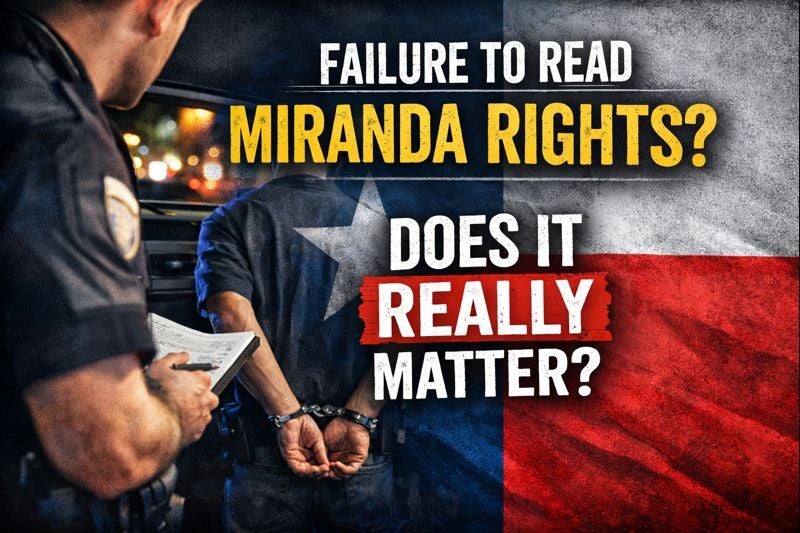
One of the most common questions criminal defense lawyers hear is:
“The police never read me my rights — doesn't that mean my case gets dismissed?”
It's a fair question. Movies and TV have drilled this idea into our heads for decades. But here's the truth that surprises most people:
👉 In most Texas criminal cases, failure to read Miranda rights does not get charges dismissed.
If you were arrested in Dallas County or anywhere else in North Texas and you're wondering whether your rights were violated, this article explains what Miranda rights actually are, when police must read them, and why — in real life — they often don't matter nearly as much as people think.
What Are Miranda Rights?
Miranda rights come from a U.S. Supreme Court decision that requires police to advise someone of certain constitutional rights before conducting a custodial interrogation.
The familiar warning usually sounds something like this:
-
You have the right to remain silent
-
Anything you say can and will be used against you in court
-
You have the right to an attorney
-
If you cannot afford an attorney, one will be appointed to you
These rights are meant to protect the Fifth Amendment right against self-incrimination.
But here's the key detail many people don't realize:
Police are only required to read Miranda rights in very specific situations.
When Are Police Required to Read Miranda Rights?
Miranda rights are required only when BOTH of the following are true:
-
You are in custody, and
-
Police are interrogating you
If either of those elements is missing, Miranda does not apply.
Let's break that down.
What Does “In Custody” Mean?
“In custody” doesn't always mean handcuffs or being taken to jail.
Courts look at whether a reasonable person would feel free to leave. Factors include:
-
Were you told you were under arrest?
-
Were you physically restrained?
-
Were multiple officers present?
-
Were you in a police car or interrogation room?
-
How long were you detained?
Many roadside stops, brief questioning, or field investigations do not count as custody — even if they feel intimidating.
What Counts as “Interrogation”?
Interrogation means direct questioning or actions designed to get incriminating responses.
Casual conversation, routine booking questions, or spontaneous statements you volunteer do not count as interrogation.
That's why officers often say things like:
-
“What happened tonight?”
-
“Do you know why I stopped you?”
-
“Where are you coming from?”
If you aren't technically in custody yet, Miranda warnings aren't required — even if your answers hurt your case.
The Big Myth: “They Didn't Read Me My Rights, So My Case Is Thrown Out”
This is one of the biggest misconceptions in criminal law.
🚫 Failure to read Miranda rights does NOT automatically dismiss a case.
Instead, the consequence is usually much narrower.
What Actually Happens If Miranda Is Violated?
If police should have read Miranda rights but didn't, the usual remedy is:
👉 Certain statements may be suppressed (excluded from evidence)
That's it.
-
The arrest is still valid
-
The charges usually still stand
-
Physical evidence is still admissible
-
The case almost never gets dismissed solely for this reason
If prosecutors can prove the case without using the statements, the case moves forward.
And in many cases, they can.
Why Miranda Rights “Don't Matter” in Most Cases
This is the uncomfortable truth most lawyers won't sugarcoat:
1. Police Often Don't Need Your Statements
Many cases are built on:
-
Body camera footage
-
Dash camera video
-
Field sobriety tests
-
Breath or blood tests
-
Witness statements
-
Physical evidence
Even if your statements are thrown out, the prosecution may still have plenty to work with.
2. Many Statements Are “Voluntary” and Still Allowed
If you volunteer information without being questioned, Miranda doesn't apply.
Statements like:
-
“I only had two drinks”
-
“It's not even my car”
-
“I didn't know that was illegal”
…are often admissible even without warnings.
3. Traffic Stops and Early Questioning Are Usually Miranda-Free
In DWI and drug cases especially, most damaging statements happen before custody begins.
That's why officers often delay arrest while asking questions.
Perfectly legal. Perfectly frustrating.
Situations Where Miranda Can Still Be a Big Deal
While Miranda violations don't usually end cases, they can still matter in the right situation.
Miranda issues are most impactful when:
-
The confession is the main evidence
-
The case relies heavily on statements
-
Police clearly interrogated after arrest
-
You requested a lawyer and questioning continued
-
You invoked your right to remain silent and were ignored
In these cases, a skilled defense attorney can file a motion to suppress and seriously weaken the prosecution's case.
What Miranda Rights Do NOT Protect You From
Miranda rights do not:
-
Prevent arrest
-
Stop police from investigating
-
Keep physical evidence out of court
-
Apply to breath or blood tests
-
Automatically get charges dropped
This is why relying on Miranda alone is dangerous.
The Right That Actually Matters Most: The Right to Stay Silent
Here's the practical takeaway every defense lawyer agrees on:
👉 Miranda rights protect you only if you use them.
The safest thing you can say to police is:
“I choose to remain silent and I want a lawyer.”
Then stop talking.
Polite. Calm. Firm.
Anything else can — and usually will — be used against you later.
Arrested in Dallas and Unsure If Your Rights Were Violated?
Every case is different. Miranda issues are highly fact-specific, and small details can make or break a suppression argument.
If you were arrested in Dallas County or surrounding North Texas counties, an experienced criminal defense attorney can review:
-
Body camera footage
-
Audio recordings
-
Police reports
-
Timing of arrest vs questioning
-
Whether your rights were properly invoked
Sometimes Miranda doesn't matter.
Sometimes it changes everything.
You won't know until a lawyer looks closely.
Final Thought: Don't Rely on TV Law
Hollywood made Miranda warnings famous — but real criminal cases are far more complicated.
If you're facing charges, don't assume:
-
Silence by police helps you
-
A missed warning ends your case
-
The system will “sort it out”
Protect yourself early.
Talk to a Dallas Criminal Defense Lawyer Today
If you or a loved one has been arrested and you're questioning whether your rights were violated, Texas Defenders is here to help.
📍 3302 Swiss Circle, Dallas, TX 75204
📞 Call 214-306-9696
⚖️ Serving Dallas County, Collin County, Denton County, Tarrant County, and surrounding areas
Your rights matter — but only when they're enforced correctly.







Comments
There are no comments for this post. Be the first and Add your Comment below.
Leave a Comment