
DWI in Texas: What Really Happens After the Arrest?
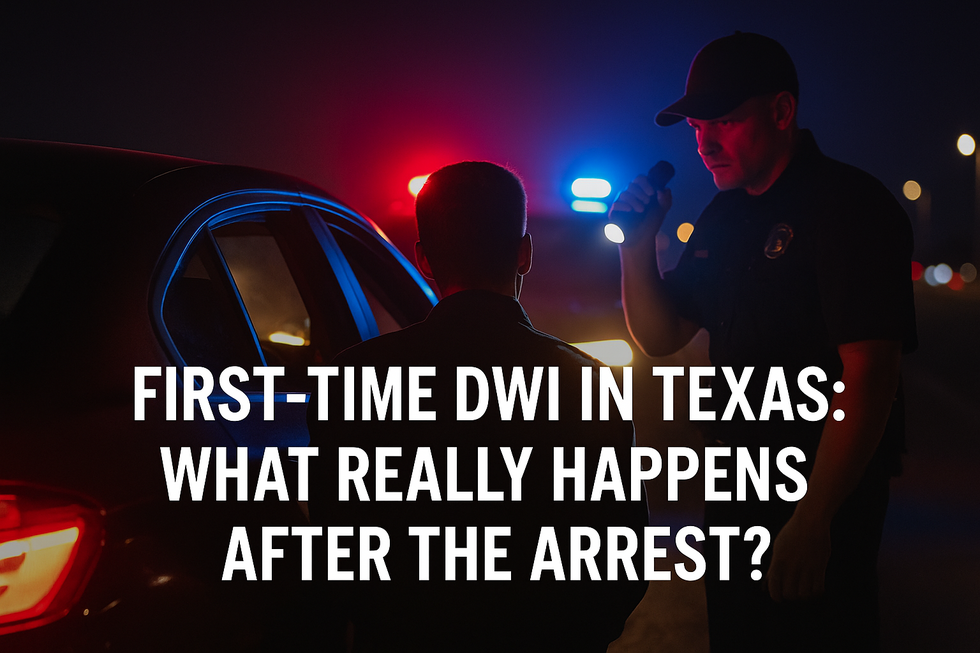
Understanding What Comes Next
Being arrested for a first-time DWI in Texas can be one of the most stressful and confusing experiences of your life. Whether the arrest happened after a traffic stop, a holiday party, or a random checkpoint, it's important to understand what's coming next — and what you can do to protect your future. At Texas Defenders, we help clients across Dallas, Tarrant, Collin, and Denton Counties navigate the DWI process, fight back against the charges, and work toward the best possible outcome.
1. The Arrest and Booking
If an officer believes you're intoxicated—meaning you've lost the normal use of your mental or physical faculties, or your blood alcohol concentration (BAC) is 0.08% or higher—you'll be arrested and taken to jail. Once there, you'll go through booking, which includes fingerprinting, photographs, and an inventory of personal items.
You'll then be held until bond is posted or until you appear before a magistrate judge who sets conditions for your release.
2. Driver's License Suspension (ALR Hearing)
Immediately after a DWI arrest, you'll face a separate license suspension case known as the Administrative License Revocation (ALR) hearing.
You have 15 days from the date of arrest to request this hearing. If you don't, your license will automatically be suspended—often before your criminal case even begins.
At Texas Defenders, we file the ALR request right away and use the hearing to gather valuable information about the officer, the stop, and the evidence—often helping us later in your defense.
3. The Criminal Court Process
A first-time DWI in Texas is usually charged as a Class B misdemeanor, punishable by:
-
Up to 180 days in jail
-
A fine up to $2,000
-
A driver's license suspension of up to a year
If your BAC was 0.15% or higher, the charge can be enhanced to a Class A misdemeanor, doubling potential jail time and fines.
After your release, your attorney will appear with you in court for arraignment—the first formal setting where you enter a plea of not guilty. The following months involve evidence review, discovery, and negotiations with prosecutors. Your lawyer can challenge whether the officer had probable cause, whether the breath or blood tests were reliable, and whether your constitutional rights were violated.
4. Possible Outcomes
Even for a first offense, a DWI conviction can have serious long-term consequences. Depending on the facts of your case, outcomes can include:
-
Case dismissal due to lack of evidence or procedural errors
-
Reduction to a lesser offense, such as Obstruction of a Highway
-
Pre-Trial Diversion (PTD) or Deferred Adjudication, in limited counties
-
Conviction, resulting in probation, fines, or short jail time
Every county—including Dallas, Tarrant, Collin, and Denton—handles these differently, which is why local experience matters.
5. What You Can Do Right Now
The most important step after a DWI arrest is to act quickly. You can:
-
Request your ALR hearing within 15 days
-
Gather any receipts, text messages, or witness names from the night of your arrest
-
Avoid discussing your case with anyone except your attorney
-
Call Texas Defenders at 214-306-9696 to schedule a free consultation
Our team has successfully defended hundreds of DWI cases across North Texas, often achieving dismissals, reductions, or complete acquittals. A first-time mistake should not define the rest of your life.







Comments
There are no comments for this post. Be the first and Add your Comment below.
Leave a Comment